Rats
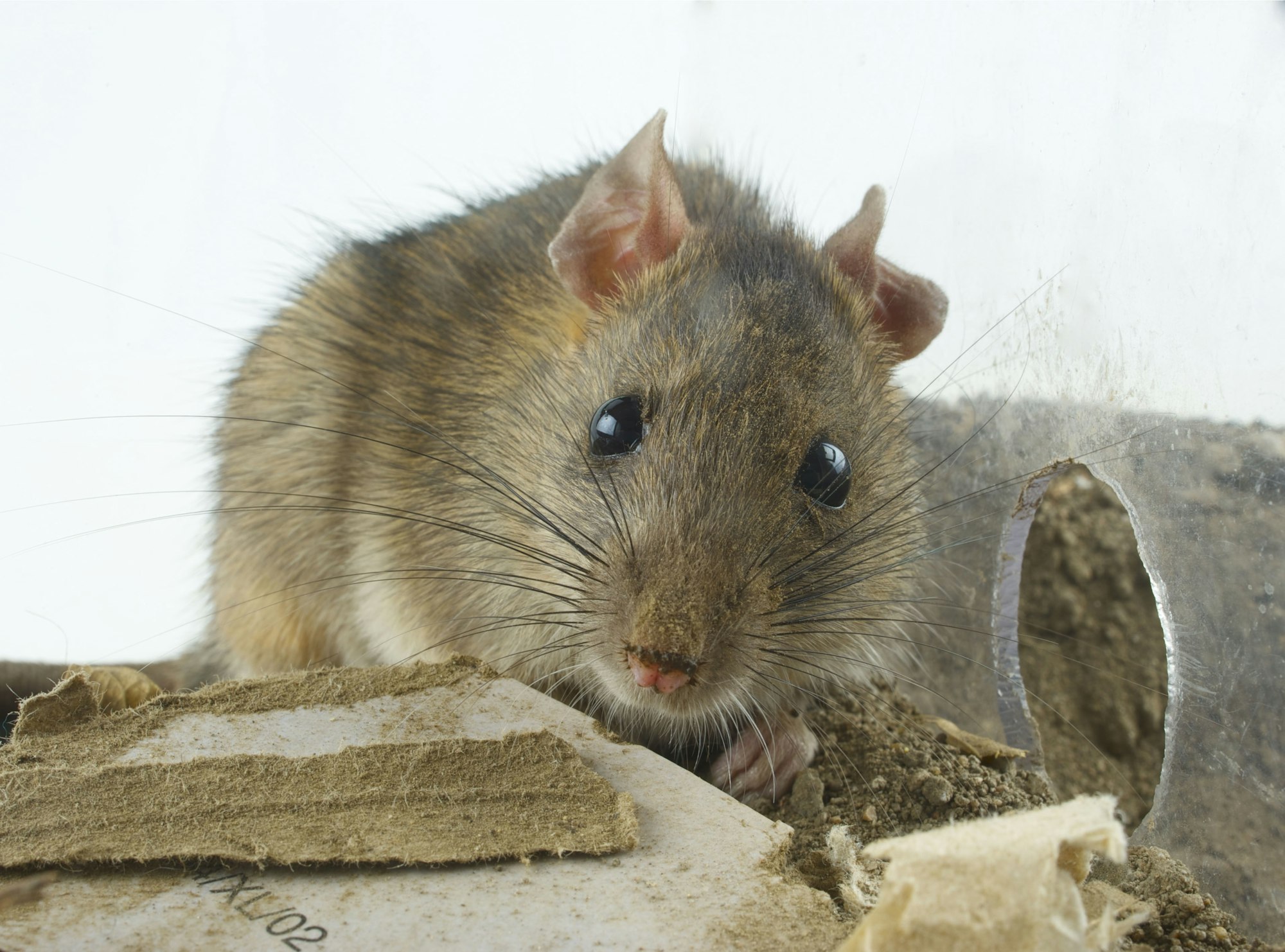
The roof rat (Rattus rattus) is agile and slender, with a tail longer than its head and body. Roof rats frequently enter buildings and move about neighborhoods by using utility lines and fences as runways. They prefer to feed on wild birdseed, pet food, and many of the fruits and nuts (including those that people do not eat) commonly found in residential backyards.
How to prevent rats around your homeInformational bulletin on ratsHow to properly store food during an emergency
Watch our educational rat videos to learn more ways to avoid rats on your property: Click here
Many plants native to California are good choices for landscape use and do not encourage rats. For a list of suggested native plants, click here.
What We Do
When an Orange County Mosquito and Vector Control District Inspector comes out to a residence for a rodent service request, the Inspector will assess the situation to see what is the best way to handle the rodent problem. Every house and every situation is different and needs to be treated as such. Some measures that might work in your neighbor's yard will not necessarily work in your yard.
When the Inspector comes to your house he or she will inspect the exterior of the home and the yard to point out potential attractants to rodents and possible entry points the rats may be entering through.
Depending on the situation, removal of these attractants may be all a homeowner needs to do to take care of the rodent problem.
Rat Education Program
The District has a multifaceted roof rat education program that includes:
- Presentations and participation in local outreach events to educate the public about rodent control practices.
- Extensive literature on rat control, rat trapping, common entry points for rats on houses and mobile homes, vegetation that attracts rats, alternative ground cover that rats are not attracted to, how to rat-proof homes and many other publications are available in print and electronically.
- Inspectors educate homeowners and neighborhood groups about rats on their property and how to remove sources that would attract rats onto the property.
- Staff attends local and national educational conferences to learn about advances in rat control techniques, products, and other measures to better educate and protect the public from rats and the potential harm they can cause.
Disease
The most common pathway of exposure to rodent-borne diseases is through consumption of food or water contaminated with rodent feces and urine. Rats and rat nests can be infested with biting mites and fleas. Mites and fleas can transmit illnesses to humans.
Rats and their fleas are capable of transmitting a variety of human diseases. Among the diseases transmitted by rats, bubonic plague is perhaps the best known and the most serious. There have been no outbreaks of plague in Orange County in recent history. The potential of such outbreaks could increase if rat populations are allowed to increase unchecked.
.png?ixlib=rb-1.1.0&or=0&w=720&h=720&fit=max&auto=format%2Ccompress&s=8e104203bd56182dbc38267b0db9a05a)